Home · Growing New Markets · Pulses in Feed
Canadian peas have significant growth potential as a feed ingredient in global livestock and aquaculture markets. In 2025–26, we advanced that case on three fronts — building a sustainability-driven commercial argument in North America, completing rigorous research trials in Southeast Asia, and growing awareness in Latin America’s rapidly growing feed sector.
2
Research trials completed
in Southeast Asia
10+
Feed industry events
across the Indo-Pacific
2
New markets entered —
Mexico & Colombia
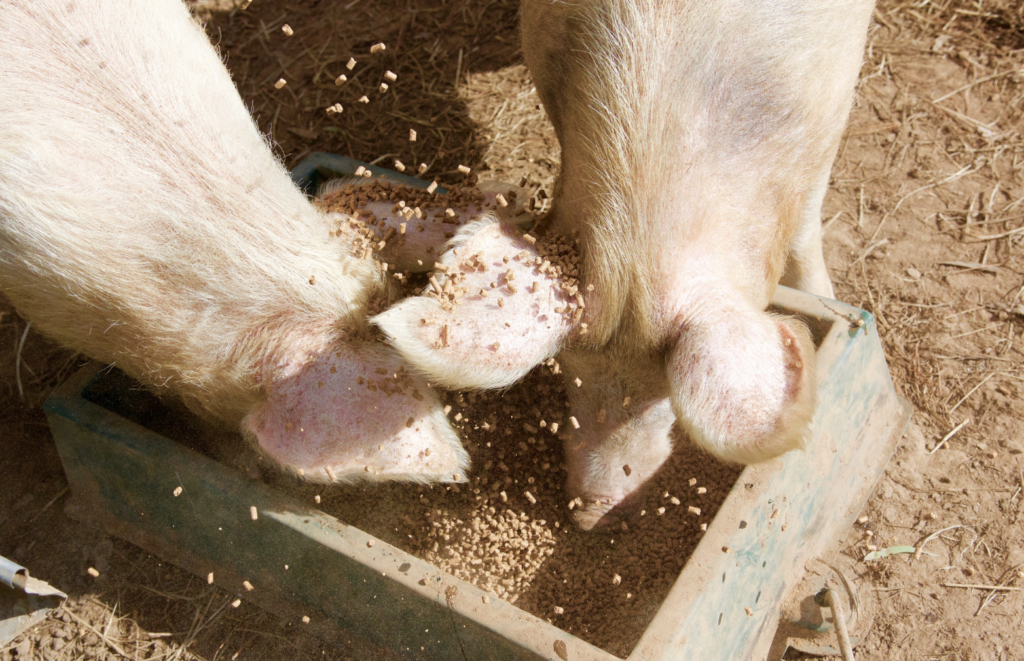
Canadian peas are already a familiar ingredient in North American swine rations. The opportunity in 2025–26 was to move the conversation forward to give producers a stronger reason to increase inclusion.
In 2025–26, Pulse Canada worked with feed and sustainability consultants to develop an Intervention Design Document for a carbon inset protocol involving pulses in feed. This document will give livestock and feed companies a rigorous, verifiable methodology to quantify the carbon emission reductions that result from including peas in their feed rations. With this protocol in place, companies can translate pea inclusion into measurable sustainability outcomes that support corporate ESG commitments and emerging carbon markets.
This work positions Canadian peas not just as a cost-competitive protein source, but as a tool for livestock companies navigating real pressure to demonstrate environmental performance. Alongside this, Pulse Canada engaged directly with several major Canadian livestock companies — focusing on the supply and demand situation for Canadian yellow peas, their nutritional characteristics, and how peas could support their corporate sustainability goals.
Southeast Asia is one of the most significant growth opportunities for Canadian peas in feed. In 2025–26, Pulse Canada completed two major research trials demonstrating how peas can add value in local livestock production systems.
Kasetsart University, Bangkok, Thailand
YELLOW PEAS IN LAYER HEN DIETS
Key Finding
Yellow peas can replace up to 24% of conventional ingredients in layer hen diets with no loss in production performance — and may support improved egg quality and immune health.
A 12-week feeding trial conducted at Kasetsart University in Bangkok evaluated yellow pea inclusion in laying hen diets at levels up to 24%.
Hens fed diets containing up to 24% yellow peas showed no negative effects on production performance — body weight, egg production, feed intake, and feed conversion ratio all remained comparable to the control group. Beyond performance, higher inclusion levels were associated with improved internal egg quality: yolk weight increased significantly, indicating enhanced nutrient allocation toward yolk formation.
The trial also revealed a potential immune benefit. Hens receiving higher inclusion levels showed blood markers associated with reduced inflammatory activity, without any signs of immune suppression or physiological stress. The one notable tradeoff was reduced yolk pigmentation — a predictable result of replacing corn — which is correctable through standard supplemental pigment addition.
University of Philippines Visayas, Philippines
PEA STARCH IN SHRIMP FEED
Key Finding
Pea starch can replace wheat flour at up to 50% inclusion — no loss in performance, with potential benefits for gut health and immune function.
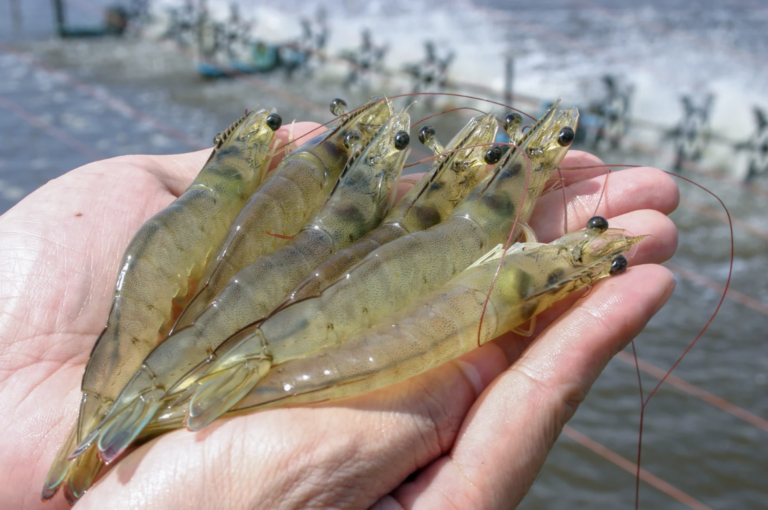
A second trial, conducted with researchers at the University of the Philippines Visayas, tested pea starch concentrate as a substitute for wheat flour in Pacific whiteleg shrimp (Litopenaeus vannamei) feed — the world’s most commercially farmed shrimp species.
With wheat flour prices volatile and supply uncertain, the aquaculture sector is actively seeking alternatives. The trial demonstrated that pea starch can fully replace wheat flour at up to 50% inclusion without compromising shrimp survival, weight gain, or feed conversion.
Critically, shrimp fed with peas also showed improved gut integrity and the highest activation of key immune enzymes — suggesting that pea starch also supports shrimp health beyond simple nutrition. Shrimp consuming all pea starch treatments had significantly greater villi length (in intestinal tissue), a marker correlated with improved nutrient absorption and assimilation. This is an important finding that creates additional value for peas in aquaculture applications.
Research findings only create commercial opportunity if they reach the right audiences. In 2025–26, Pulse Canada and in-country consultants participated in more than ten feed industry events across Thailand, Vietnam, the Philippines, and Bangladesh — including trade missions supported by the provinces of Saskatchewan and Alberta, and a full-day technical seminar for a major regional feed manufacturer.
Work also expanded into pet food discussions, as many of the region’s major livestock companies have diversified into that segment.
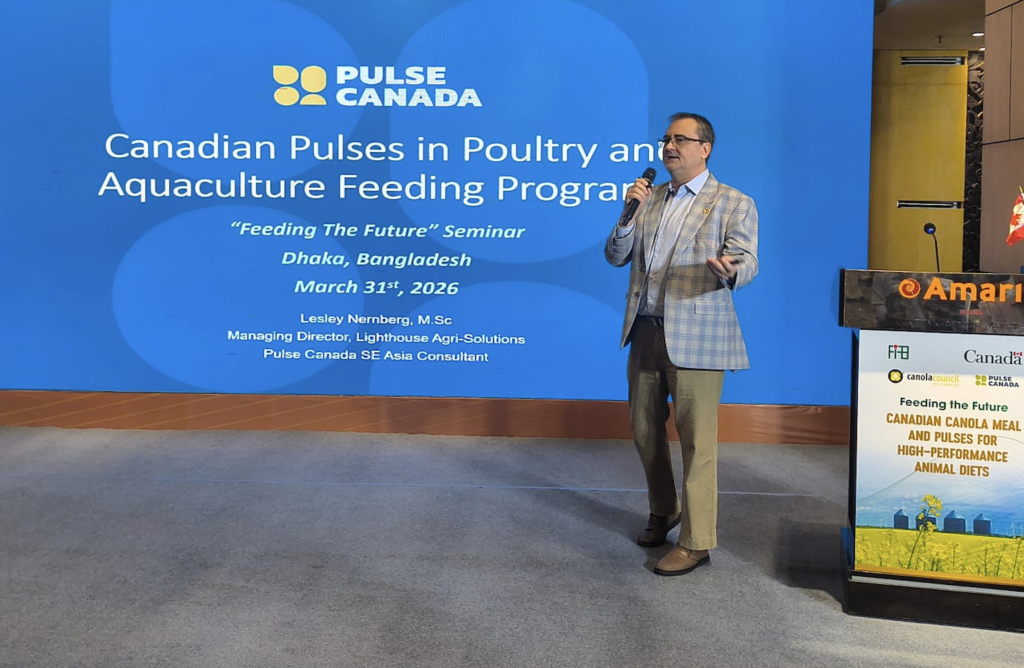
Selected Events — Indo-Pacific
Pork AND POULTRY
In Q4 of 2025–26, Pulse Canada launched an early-stage strategy to create awareness and demand for Canadian peas as a feed ingredient in Mexico and Colombia. The goal this year was foundational: make introductions, gather intelligence, and plant the seeds for longer-term commercial relationships.
MEXICO
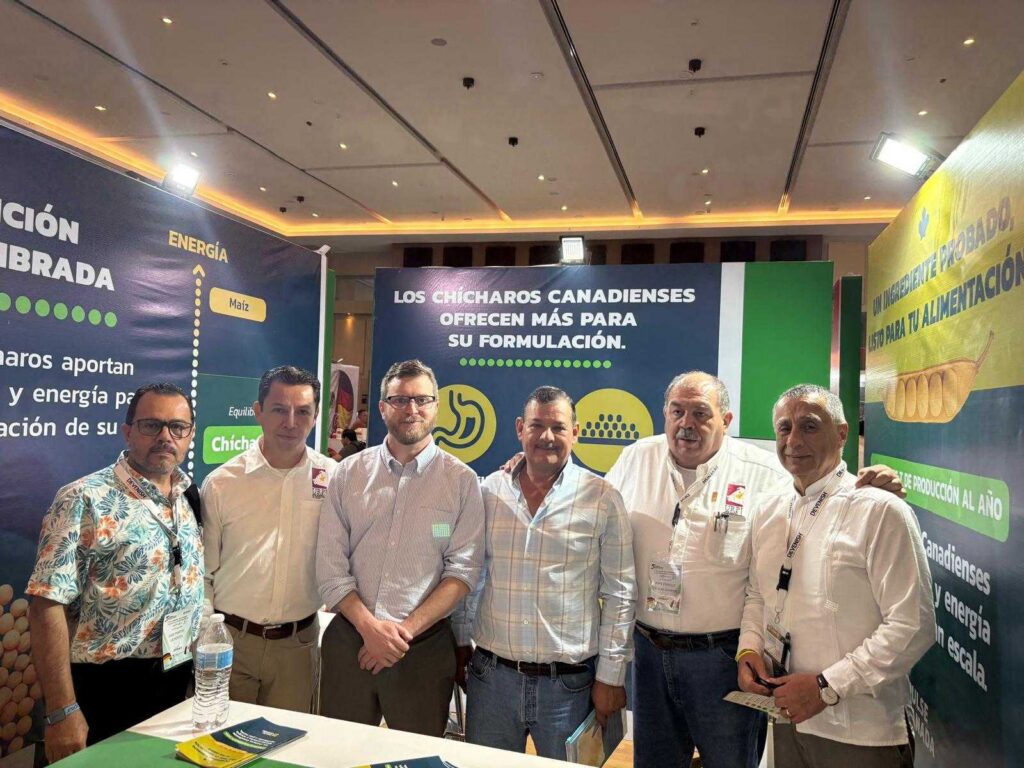
In February 2026, Pulse Canada participated in a trade mission to Mexico, joining hundreds of Canadian representatives from five sectors in a week of direct engagement with Mexican industry partners, buyers, and decision-makers. The mission also drew federal and provincial leadership, including the Minister of Agriculture and Agri-Food and the Minister for Canada–U.S. Trade, reflecting the significance of deepening Canada’s trade ties in the region.
Pulse Canada used the mission to position Canadian peas with key players across Mexico’s feed, livestock, and pet food sectors, with meetings involving national and regional industry associations, animal nutrition experts, and feed company representatives. Mexico is a major and growing market for these sectors, leading the world in egg production and consumption on a per-person basis — making it a strong fit for Canadian peas as a reliable, high-quality feed ingredient.
COLOMBIA
In Colombia, Pulse Canada engaged animal nutrition consultants working directly with some of the country’s largest livestock companies. The work quickly generated interest beyond feed — many Colombian feed and livestock companies have diversified into pet food, and opportunities in that segment are already emerging. An economic assessment showed that Canadian peas can deliver real cost savings for Colombian producers.